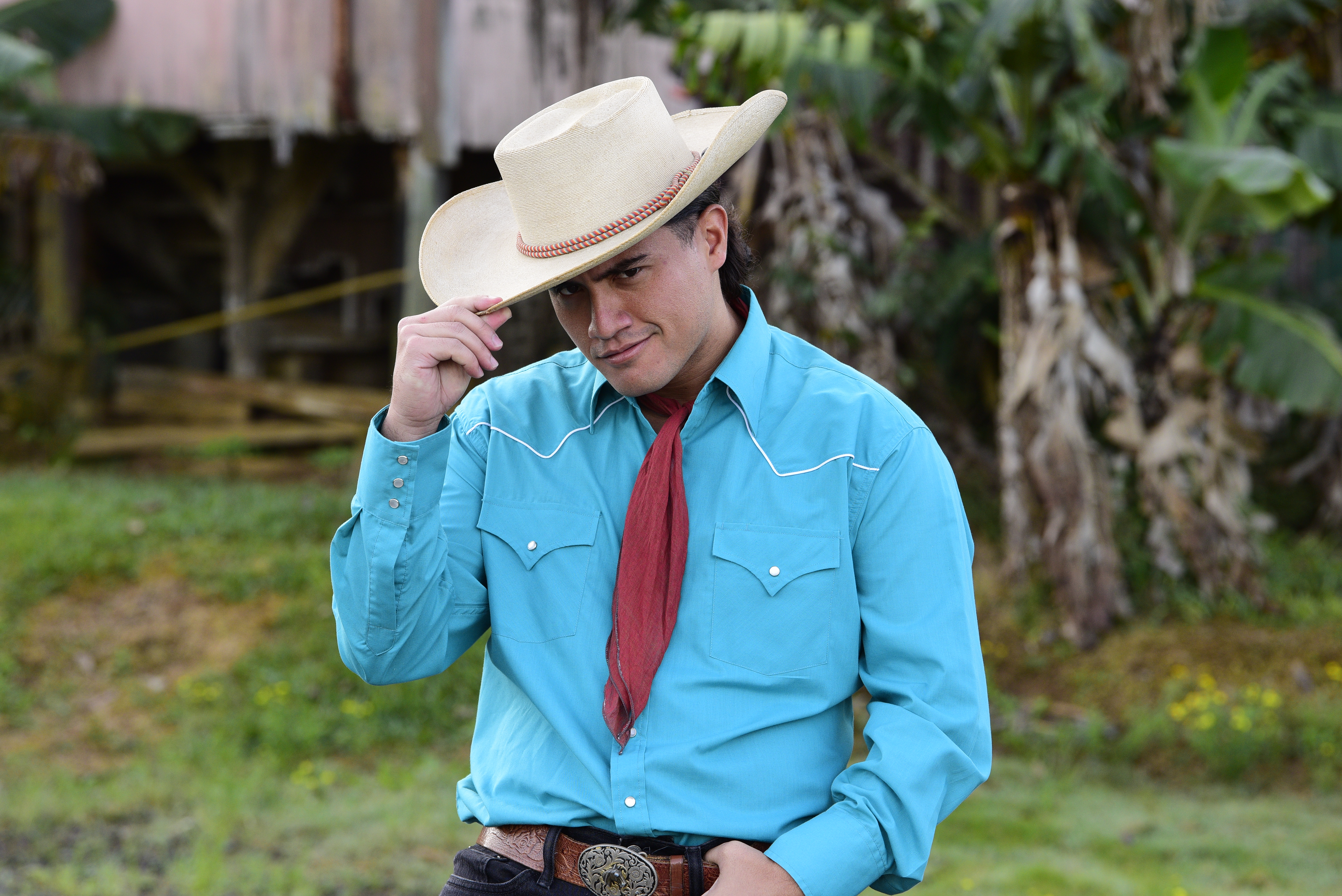
Bronson Varde talks story about how he started and what it’s like with his Film ‘Ohana on the set of Moku Moku.

Can you tell us about your journey into acting and what inspired you to pursue this career?
Growing up, I never thought of pursuing acting. I didn’t know this could be a career move until recently. I’ve always enjoyed making people laugh, which inspired me to create content for social media and YouTube. A few friends and I would create comedic sketches, and they grew a small following. From these sketches, I caught the eye of writer Holly Sereni for a dramatic short film she was working on called Red House. I was fortunate enough to be cast as the lead. This was my first glimpse into seeing how the industry worked, and it was for a drama. A genre I never thought I’d be doing. Luckily, I had a lot of help from director Gerard Elmore and producer/actor Ian Cusick. Ian was on set every day and would coach me and answer any questions I had about certain scenes. Being able to work with Ian and be a part of a collective project such as Red House was a great experience and really started the fire to want to do more roles.
What kind of roles do you find most challenging and why?
I have yet to do much, but the most challenging roles for me are dramatic roles. I find it easy to let loose and be silly, so comedies are second nature for me because of that comfort, and the character is usually someone I can easily relate to. If I’m playing someone with a darker past, it’s a lot more challenging to get there, but it’s still very intriguing.


How do you prepare for a new role? Can you walk us through your process?
When preparing for a role, I like to start with the character’s past. What are the things that have happened to them? The good, the not so good. Where did he grow up? Who are the people who interact and influence him the most? I like considering the character’s surroundings, people, and location. Does he have a goal or dream? It helps to think of these things so that I can bring intention to why the character is the way he is. These questions also help me relate to the surface more deeply.


Have you ever had to portray a character drastically different from your personality? How did you approach that?
I had to portray a recovering drug addict in Red House. That was difficult for me because I’ve never experienced that firsthand. I had to look outside and draw from people that I knew who unfortunately dealt with and were dealing with being addicted to drugs and living a criminal lifestyle. Moku Moku is a different story. I got lucky. It just so happens that Kimo is my spirit animal.
Can you share a memorable on-set experience or anecdote that significantly impacted you as an actor?
We were filming the first episode of Moku Moku. I was reviewing the lines in a particular scene and thought it wasn’t flowing right. I told Jonathan Melikdse how I felt and asked him if I could change it to make it flow better for the character, and he said, “Of course. If you feel that you would say something different at any time, let me know.” That situation reflects what it’s like working on Moku Moku. You feel the aloha on set and the freedom to speak your mind. It is a collaborative project that wants to tell a story that is funny and true to Hawaii’s culture and lifestyle.

What do you believe is the most crucial quality or skill for a successful actor to possess?
Being open-minded is the most crucial quality you should possess. You might have thought about how a particular character is portrayed or how the tone of a scene is set, but you need to be open to the thought that it might be different. That leads you to be able to adapt, which only makes you a better actor in the long run.
How do you handle rejection in the competitive acting world, and what keeps you motivated?
Things happen for a reason. And when you get a “no,” you were meant to get that “no.” You chalk it up to a learning experience and keep moving forward. That’s the only thing you can do.


Can you describe your collaboration with directors and fellow cast members? How do you build chemistry on set?
Building a relationship with all the crew and cast members is essential. It only strengthens the project as a whole because people can feel less restricted or scared to over-step certain boundaries. Especially in a comedy, having everyone on set feeling loose is how you want it. Everyone is a part of Moku. Moku is one big Ohana, and that is how it should be.
Are there any actors or directors whose work has significantly influenced your own, and if so, in what way?
Besides being able to work alongside my extremely talented co-stars Patty Lee and Chino LaForge, Ian Cusick was a significant influence. I had the privilege of working with him hands-on. He taught me things on set that I still carry with me. I was fortunate enough to have a mentor like him during that short time on set.


What do you enjoy most about live performance, and how does it compare to working in film or television?
The last live performance play I participated in was in fifth grade, and I had two lines. I’ve been able to step it up a little since then. I respect the hell out of people who can do live performances. Still, I like working in film because I can do multiple takes.
Can you share your experience with character development and how you make a role your own?
You ask the writer or director about the back story. Gather as much information as you can about the character, and then from there, you can fill the holes with certain traits that you think should be a part of that character.

How do you balance your personal life with the demands of an acting career, especially during intense shooting schedules?
A lot of FaceTime calls. Nah, you have to just make time when you can. For Moku Moku, I was flying back to Oahu when I could to play music and visit my family and girlfriend. I find joy in acting, and the atmosphere on set with Moku Moku makes being away from home a lot easier. Being a couple islands away doesn’t hurt either. 40 minutes, and I’m back home.
Have you ever been asked to perform a particularly physically challenging stunt or emotionally demanding scene? How did you
prepare for it?
I haven’t done physically challenging stunts, but I’ve had a few emotionally demanding scenes. It helps me prepare by thinking of the character’s intention. What doesn’t want out of the situation presented? And why is it hard for him to get it? Those questions needed to be answered before I entered a scene like that. Also, I was taught to manage my time. It’s okay if it takes a while to get to the emotional state you need. Don’t rush it.

What is your perspective on the evolution of diversity and representation in the entertainment industry, and how has it affected your
career?
It’s incredible seeing a diverse set of people on screen and in the industry. I’m always thrilled when I see a Hawaiian or Polynesian make it in a big way. It opens doors for others and brings more eyes to authentic stories and talents that people need to see. From this diversified representation, a show like Moku Moku is being made. The timing is perfect, and I am super grateful.

Looking back on your acting journey, what advice would you give aspiring actors just starting out in the field?
I’m not sure if I’m even qualified to have anyone take my advice, but if I were to, I would say to just be open. Be open to all the “nos” and the “yeses” you’ll get. Be open to the opportunities that’ll present themselves to you. Even if it sounds different or challenging. It’s all about growth as an actor and, more importantly, as a person. So be open to it all.


Follow Bronson Varde on your favorite social media platforms: